Concealment, a confession, and some hush-hush musings …

Many years ago, I compiled a secret document … and hid it in a file on my computer.

I gave it a mundane title so that no one in a million years would think to open it, and squirreled the file away in a folder that was packed with workaday bits and pieces.

But what was this covertly crafted secret, stashed away in an anonymous corner of my desktop?

  • The details of a secret plot to buy up the world’s resources of chocolate as a means of gaining control over an army of sugar addicts? 
  • An unconventional cure for ‘drums disease’ (that one’s for another time!!) that would make me billions, and which I had to conceal from big business competition? 
  • Classified plans for the world’s first invisibility jet pack?

No, no, and nope.

It was, quite simply, a set of rules for life. It’s real title was ‘My World’.  I added to it over many years, creating a sort of ‘guide to the universe’. 

The reason I did this was because, at the time, my beliefs, tenets – in fact my whole perception of what I felt the world should be – was being undermined, scorned, dismissed or contradicted.  So, as an act of survival, I collated my thoughts in a safe place where they could be free of criticism.  I re-read the document every now and then to remind myself that what I believed in had value.

I rediscovered ‘My World’ recently (proof I did a good job of hiding it!) and it really struck me how normal and innocuous these hopes and beliefs were.  And then it made me sad that I’d had to record such basic principles clandestinely in order to keep myself sane, and reassure myself that my blueprint for life was – actually – perfectly OK.

I also realised that, if I may say it myself, it was a document worth sharing.

So here it is.  An alliterative, alphabetical life map which got me through some dark days.  It’s nice to be able to put it out into the open.

MY WORLD

In my world …

Ambition is celebrated and nurtured, nobody is afraid to show Affection and everybody Accepts each other ‘just as they are’.  Being Able to Admit when one is wrong is held in high regard.  And it’s ok to be Angry and show it, WITHOUT condemnation.  Anger that motivates Action is respected as a sign of passion and character.

Beautiful things are noticed and treasured.  The Baiting of others in order to give yourself the opportunity to hurt them harder is regarded as a very low practice indeed.  Books are absorbed and used as tools for self-change – and are not just spouted forth at others.

Creativity is encouraged and fostered, Conscientiousness is the norm, everybody has a strong social Conscience – and all the simple joys in life are Celebrated heartily … but a healthy Cynicism is always present.  Credit where Credit is due … and not where it isn’t.  Comfort and Compromise are given freely – and nobody wants to be Cruel.

Dreaming is compulsory!  “You’ve got to have your Dreams; if you don’t have your Dreams, how you’re gonna make your Dreams come true?”

Expectations are high, and a child-like Excitement for life is maintained into adulthood.

Friends meet regularly; Fools are not suffered gladly.

Generosity is freely and graciously given; when you want something, don’t just sit there waiting for it to come to you – Go Get it! … and everyone has a bit of Get up and Go for the everyday things, too.  Graciousness – and Grace – are treasured virtues.

Hopefulness is all around, Hospitality is given generously and with pride – and Humility is not difficult.  Hypocrisy is outlawed.

Immaturity is only seen in the young.

Joy is to be found everywhere … you Just have to look for it. Justice will prevail!

Kindness is liberally bestowed.

Love is deep, rich – and passionately interested in the life and situation of the loved one.  Listening attentively to others is considered the Least you can do!

Mistakes are acknowledged with grace – and without blaming anyone or anything else.  Self-appointed Martyrdom is definitely not becoming in a person!

N … nobody is afraid to say “No”.

O Being Organised is a virtue – no matter what the lazy, nor the so-called ‘free-spirited’ have to say about it.

Presents are given – and received – with grace and joy.

Questions are always asked …

Reliability – based upon compassion, intelligence and humility – is the norm.

Sincerity is habitual; “Sorry” is an easy word to say.  Nothing is ever done out of Spite.

Trumpet blowing is encouraged! … Blowing your own – and blowing somebody else’s to give them a helping hand – are encouraged in equal measure.

Understanding of others comes easily … if not, an effort is made to achieve it.

Vigilance – that is, to always be on the lookout for acts of kindness that you can do for others – is the norm.

Where there’s a Will, there’s a Way … and nobody has to Wait to be asked (for assistance, comfort or affection).  Admitting you are Wrong comes easily – and doesn’t stick in the throat.  And if you are one of those people who Wants to stand up and change the World, you are free to do it Without derision.

X Everybody thinks ‘outside the box’.

Youthfulness of mind is always present.

Zeal is good!

Hi-Tech versus Lo-Tech … And Why Lo-Tech Wins Every Time

There’s a running theme of the value of Lo-Tech in all of my books.  I wonder why…

A few weeks ago I received some communications from my internet and telecoms provider.

We’re moving you over to our NEW digital home phone service!’ it chirped.  The service had a funky name, and arcs of laser light swept across the information leaflet.  It all looked jolly dynamic and efficient.

But a few sentences later, they casually dropped this little bombshell: ‘… some telecare and burglar alarms won’t work …’

Wait, WHAT?  

Are you telling me that ‘upgrading’ to digital results in essential security and assistance equipment no longer working?  What the heck?

And it got worse …

What if there’s a power outage?’ somebody asked. 

If there’s a power cut or your broadband’s down, you won’t be able to make calls … including 999 calls.’

SAY THAT AGAIN??

You won’t be able to make 999 calls.’ 

But your mobile will still work as long as it’s charged …’

Oh, brilliant … 

As long as my mobile phone is charged, I will have access to emergency services if I need them in a power cut.  But if my phone runs out of battery, I will have to wait for the power cut to finish before I can recharge my phone and finally call for help.

They didn’t go into what would happen if the mobile phone network broke down…

This is NOT progress.  This is rubbish.  Yet it was being sold to me as a vision of a bright future.

I have an old, analogue ‘click’ phone which I used to plug in, in a power cut.  I knew that in a national emergency, when the mobile networks might be down too, this little phone could be a vital lifeline.  The old phone lines used to work in a power cut, you see … so my basic-tech phone was reliable when the big tech stuff failed.  But thanks to this ‘new, improved’ service, my humble little Lo-Tech phone doesn’t work anymore.  Further proof that Hi-Tech solutions can make things a whole lot worse.

Here’s another example.

My local bus company cut a lot of services a few months ago.  As a result, a bus I used to take to a neighbouring village no longer ran every hour, but once every two hours. This was going to be very inconvenient.  BUT the new timetable offered a solution: there was an hourly bus which went to the next town; you could get off it halfway, cross the road, and hop on the bus coming the other way, which would call in at the village.

Sounds super, doesn’t it?  Somebody had put the timetable into a computer and come up with a splendid ‘fix’.

Except … the computer didn’t know the area at all and failed to take the following details into account:

  • The place they suggested you got off and crossed the road was a known accident blackspot on a busy road in the middle of nowhere
  • There was no pavement to stand on as vehicles careered by
  • There was no bus shelter to protect you if the weather was bad
  • The bus stop was in a Wi-Fi blackspot so you couldn’t use the bus app to check the whereabouts of your bus – or see if it was late/cancelled
  • Nobody used that bus stop, so there was the danger that the driver would just whizz past
  • The location of the bus stop was situated in a place (I kid you not) WHICH WAS REPUTED TO BE HAUNTED

Nobody in their right mind would want to change buses there.

A humble human with an understanding of the local area would NEVER have come up with this terrible timetabling solution.  A man with a map, a geographer with judgement, a ‘biddy who buses’ – even a ghosthunter with gumption could have told the bus company that this was a crackpot way to solve the problem.  The Hi-Tech solution was stupid, creepy and downright dangerous. 

So this is why the heroic girls in my books rely on Lo-Tech to defeat the foe.  Whether it’s disabling a security camera with a baseball cap, evacuating an office with the help of some frozen prawns, or calling for assistance using cobbled-together second-hand radio parts, Lo-Tech repeatedly saves the day.  Hi-Tech will always fail at some point – or it will become so powerful that humans will need to subvert it.  Either way, it makes sense to keep our Lo-Tech options available and ready to go.

I repeat: Lo-Tech beats Hi-Tech every single time.  Never forget this – it might be the key to your survival.

A Nice Bit of Word Salad …

Language gives us words to think in. 

Without words, our thoughts, hopes and dreams would have little definition; they would be nebulous and difficult to express.  A single word can encapsulate a whole range of ideas, allowing us to ‘own’ what we are experiencing and thinking.

One of my favourites is resistentialism … the term for when inanimate items (the printer that goes wrong when you’re in a hurry; the doorway you’re always banging your elbow on) seem to be conspiring against you.  I’ve spent a lot of energy over the years a) shouting at furniture and b) threatening to throw electrical appliances out of the window – so to find that this is a phenomenon with a proper name, is reassuring.  I am not a lunatic: I am part of a community of like-minded people with an understandable grudge against belligerent objects. 

The phrase word salad gave me a quick way to dismiss the meaningless drivel spewed out by authorities and marketers … virtue signalling provided me with the phrase I’d been looking for, after decades of revulsion at those who just have to let you know how ‘good’ they are.  And the term gaslighting enabled me to understand that I Was Not Mad, that Others Had Been There Before Me and that People Would Understand – because it had an actual name, and it was real.

But the word which gave me the most joy on discovering it, was mansplaining.

[Right – I’m going to jump in straight away and say that I think men are great and I hugely appreciate all the men in my life, and that this is a blogpost about the value of WORDS and MEANINGS and not a takedown of men.  But mansplaining is definitely a thing, so I’m going to talk about it.  Is that clear?  Jolly good.  Onwards …]

Here is something that happened to me many years ago, which I hope will demonstrate how important it was for me to discover the ‘M’-word for the first time.

Back in my musician days, I was playing in an opera orchestra for a season of Bizet’s Carmen.  The orchestra was sat in a darkened ‘pit’, which meant we all had lamps attached to our music stands to enable us to see the music. 

During one rehearsal, my lamp cut out.  Having a basic understanding of domestic electrical wiring, I guessed that one of three things had happened: the bulb had blown, the fuse had gone – or there was a dodgy wire connection somewhere.  The easiest one to check was the third option.  I gave the wire leading into the lamp a wiggle and – lo and behold – the lamp flickered on and off.  I’d got lucky and discovered that a loose connection was to blame.

I informed the conductor that my lamp had stopped working.  I started to tell him that I’d given the lead a wiggle and knew it was a loose connection … but he wasn’t listening.  He leapt from his podium and started poking about in the light fitting, postulating about bulbs and fuses.  I tried again to say that I had already figured out it was a loose wire – but, surprisingly for a musician, he seemed to have become totally deaf.  The (male) oboist sitting next to me also started meddling with the light and joined in with confident proclamations about fuses, plugs and new bulbs.  Then the company electrician got involved … once more I tried in vain to talk about the loose wire … but by now all three of them had somehow got between me and my music stand, and my little voice piping up behind them had no credence.  I watched them posture and point and waste a LOT of time trying new fuses and bulbs, all the while giving a running commentary about what they reckoned was going wrong.  Finally, they worked out the problem was the wire, the electrician fixed it – and I became visible again just in time to have everything explained to me in great detail.

‘It was a loose connection,’ lectured one of them.  ‘It wasn’t the bulb or the fuse.’ … And then I got a patronising lesson in primary-school level circuitry.

I said nothing. 

The whole experience left me feeling belittled.  I had been ignored, talked over, disregarded; assumed to have nothing of value to contribute; branded as lacking in knowledge or skills; physically excluded; treated like a child.  And it had happened to me many times before.

I had always assumed that there must be something about me that made these men treat me this way; something lacking in my demeanour, something unconvincing … something coming from me that screamed ‘idiot’.  It must be me, right?

And then, one day, the word mansplaining was invented and burst into my consciousness like a healing spring.  The most glorious portmanteau ever created!  All that I had experienced, beautifully summarised in 12 letters.  A word which, ever since, has allowed me to dismiss being patronised with a smile, and an understanding that It’s Not Me … it’s just that sad old mansplainer guffing out hot air for reasons which are probably a bit sad, but are nothing to do with me.

We need words – we need NEW words – to give meaning to our thoughts and experiences.  Words stop emotions rattling around destructively inside us, undefined, elusive, troubling.  Words give our thoughts direction, refine our feelings – and most important of all, give us a voice, to express ourselves clearly, confidently – and with a sense that others will understand us.

A word has power in and of itself.  It comes from nothing into sound and meaning; it gives origin to all things.” ― N. Scott Momaday

Couldn’t have put it better myself.

Critical Thinking – And Why It’s More Important Than Ever Right Now

I’d like to jump in with an extract from Fierce Resistance …

(Peter Hardy has been kidnapped by the Malvanian Army, and he and his friends are being transported to a Malvanian Youth Camp. They have stopped at a large toy store and been given a toy each.)

… “First, said a lady with a guitar, ‘you must learn a special song. It’s called ze Question Song.’ She strummed the introduction.

Don’t ask questions … Question marks are bad … Children who ask questions … Are sad and wrong and mad … ‘Which?’ and ‘When?’ and ‘Where?’ and ‘Who?’ … Are words you mustn’t try … ‘What?’ and ‘How’ are naughty too … but the worst of them all is ‘Why?’

Peter wasn’t sure about this song. He liked asking questions, because life was interesting and complicated and puzzling. But no-one else seemed to mind singing it – and anyway, he wanted to keep his super blaster gun, so he joined in loudly …”

“Interesting and complicated and puzzling.”

One thing I have learnt from teaching children over the past 25 years, is that they are brimming with curiosity, goodness and common sense and that they are natural philosophers. So I was very fortunate that, during my teacher training year, a number of lecturers were members of the Philosophy for Children movement.  Creating a safe place for discussion – and fostering critical thinking skills – were very much part of the way I was trained to teach.

A simple class discussion might run something like this: 

Teacher: ‘What do people think about the way the three bears reacted to finding Goldilocks in their house?’

Child A: ‘I think they were a bit mean because she’s only a little girl and she must have been scared when they woke her up.’

Teacher:  ‘What do other people think about that?’

Child B:  ‘I disagree with ‘A’ because Goldilocks was actually being very naughty and had stolen their food, so she deserved to get told off.’

Teacher:  ‘Any more thoughts?’

Child C: ‘I agree with ‘B’ because when you’re naughty, you have to learn your lesson, and then you learn to behave well when you visit other people’s houses.’

Child ‘D’: ‘I agree and disagree with ‘A’, because the bears should have been less angry when they told Goldilocks off so she wasn’t scared, but she had broken their baby’s chair and that’s very naughty.’

You get the idea.  In philosophical discussions, children are taught that they can safely express their opinions to their teacher and peers (and that they are equally entitled to remain silent, or not join in, if they wish.)  They are encouraged to back up their opinions with evidence, to listen respectfully and attentively when other people are talking, and to express disagreement with kindness and neutrality. They are taught that people’s opinions differ widely, and that we can learn from each others’ views.  AND THEY FIND THIS EASY.  I had classroom discussions like this with children as young as 4, and they remain some of my most joyful teaching experiences.

Let’s go back to Peter in the toy shop for a moment …

“…The lady stopped playing, and pointed to an older boy sitting on the opposite side of the room.  He had short, bristly hair and a silver earring in one ear.

‘You’re not singing,’ said the lady.’

‘I hate singing,’ said the boy.  ‘And yer song’s rubbish.’

Peter quietly rubbed his hands together.  He wished he could say things like that …”

We’ll hear more about what happened to the boy who didn’t want to join in later.

Recently, it was reported that a school, as part of its ‘COVID-safe’ strategy, had stipulated that children should not make jokes about COVID-19. 

NO. Just: no.

Have a discussion about it, yes.  Ask children what they think about making jokes about COVID-19 and LET THEM SPEAK (if they want to).  They will have plenty to say about it: some will say that it’s fine and that cracking jokes is a brilliant way to deal with something scary or unknown.  Others will say that they don’t want to hear about it – ever – because it upsets them too much.  Someone might say that a loved one has died or suffered from the virus and they don’t want to be upset any more than they are already.  Others will say that it’s ok to make jokes … but that we have a responsibility towards our friends to not upset them, and that we need to make sensible and sensitive decisions about when to laugh, and when to talk about something else.  If you let the kids talk it through, they will find the balance, common sense and decency to move forward in the right way.  Kids are amazing like that

Censoring young people before they’ve had a chance to THINK FOR THEMSELVES and ASK QUESTIONS sends chills down my spine.

So, back to the boy who said he didn’t want to sing the song …

“…One of the lady’s eyebrows rose slightly.  ‘I am sorry to hear you speak zis way,’ she said.

She walked to the side of the room, opened up a small silver case and took out a syringe with yellow liquid in it.  Two other ladies stepped forward, took hold of the boy and pulled him to his feet, twisting his arms behind his back.  The lady with the shiny hair pushed the needle into the boy’s neck, squeezing it until the yellow liquid disappeared.

… The shiny-haired lady returned to the front.  She disposed of the syringe and straightened the collar on her clean, white dress.

‘Everyone in ze room will sing nicely,’ she said.

… The injected boy sang contentedly, rocking himself backwards and forwards in time to the music, his eyes lolling about in their sockets.  The verse came to an end and the lady shouted, ‘Repeat!’

The boy gave a lop-sided grin.  ‘Don’t ask questions,’ he sang, and dribbled on his T-shirt …”

When I penned that for the first time, I actually cried.  The censorship of children’s voices is unacceptable.  

It’s more important than ever right now, to allow our children to speak freely and make up their own minds about how to deal with what life throws at them. 

Trust me – they’ll do a great job of working it out.

Philosophy for Children is an organization that enables children and young people to experience rational and reasonable dialogue about things that matter to them and their teachers. You can find out more about them here.

It’s An Old Cliché – but It’s Important … and It Works.

‘Write your feelings down.’ That’s what they say, isn’t it?

But before you start imagining self-indulgent poetry and bad love songs, and prepare to be sick, I would like to put it out there that Writing Stuff Down Really Is A Useful Thing To Do.

A year or so ago, I watched a documentary programme and listened to the author Frieda Hughes (daughter of Sylvia Plath and Ted Hughes) talk about this very subject.  She said that, when we write our experiences down, “… The words remember it for us, so we don’t have to carry it any more …

I recorded this in my journal – and after it, I wrote: “YES, YES, YESS!” 

Writing things down puts thoughts and feelings on record.  A record which can be re-read at a later date, when the anger or fear or confusion or self-doubt have died down; when ‘What Was’ can be studied with objectivity and a peaceful mind. Putting our emotions on paper – pausing to find the right words and phrases to describe how we feel, slows down the avalanche of emotion and helps us deal with it in a more measured way.  Recording difficult events that made us feel small or self-doubting, validates our experience and gives us an accurate eyewitness account that we can refer to later, when we are less possessed by wild and turbulent thoughts.

And, as Frieda Hughes said, once those deeply personal, affecting events or conversations have been put on paper, they can be put to rest – safe in the knowledge that we no longer have to carry them around with us.  Because they are not forgotten, but safely stored away until we need to look at them again.  A written record of difficult times enables us to step away for a while and concentrate on the nice things in our lives … until, from a place of safety, we choose to return to it.

And returning to our personal, eye-witness record of a moment or event in our lives might help us understand that, perhaps, on that occasion, we were making a mountain out of a molehill – that, actually, everything was OK and we needn’t have got so flustered – and from that, we can learn to be more resilient and less overwhelmed by the things that bother us.

Or (as Frieda Hughes discovered) we might look back and realise that we did have a valid grievance, we did have a right to feel the way we did – that the little voice inside us that said, ‘This Isn’t Right’, was the RIGHT voice – and the voices that were saying you were being over-sensitive, or had remembered it wrong – or, god forbid, that it hadn’t happened at all – were voices that can now be silenced and replaced with calm and reason and strong sense of self-esteem.

Of course, it’s not always easy to write down things that have hurt us, stressed us out, confused us or caused us to question our own judgement.  In fact, it can sometimes feel impossible to get started on the writing, because things feel as if they’re too hard to express – or too confronting to bear.  But the words DO come, if we let them.  (And if they come out in the form of a poem or a love song, then of course you must allow them to: I was only being rude about them at the start because it made a good tagline!) … And it’s worth telling yourself that, however horrible it feels as your pen hits the paper, or your fingers tap the keys, and you begin to relive those agonies and confusions – the pay-off will be worth it … because it really is like hoicking a big, heavy backpack from your shoulders and leaving it somewhere safe to be opened later.

Yes – the idea of ‘writing your feelings down’ is a tired old notion that conjours up an image of a load of mushy old nonsense.

But it’s also a brilliant, unsung medicine that helps us to look after ourselves.

Try it – in my experience, it really does help.

Punctuation and Paragraphing: Who Knew They Could Be So Powerful?

I recently published a new edition of Fierce Resistance.

Yes, folks, there is a shiny, brand new version out there in both paperback and Kindle versions, spruced up and polished and reworked and technologically updated!  (Even in six years, phones and social media have changed so much that I needed to make some alterations to bring Beth up to date.)

Have I mentioned before that I am a tinkering perfectionist?  Every time I re-read my work, I always seem to find something I’m not happy with: a sentence won’t ‘sing’ the way I want it to, or doesn’t flow in quite the way I’d hoped.  When I edited Fierce Resistance with my eyes and ears on ‘critical overdrive’, I realised that, often, all I was doing was simply re-jigging the paragraphs and punctuation … and that this had a surprisingly dramatic impact on how it read.

Sometimes, ending a paragraph just a sentence earlier (or starting the next paragraph a sentence earlier, depending on how you want to look at it!) was all that it took to make the words tell the story in the way I wanted them to.

I also noticed that, if I followed the rule of using commas to separate a main clause from a subordinate clause, some of the passages I disliked because they felt ‘clunky’, suddenly had the flow and meaning I always wanted them to have.

That may sound like a terrible admission: an author, finally working out that punctuation rules are there for a reason and that they work?

The truth is, I was never taught about the finer points of punctuation at school It wasn’t considered an important part of the curriculum back then – and neither was grammar!  As a school kid, I learnt how to build sentences by reading books and working it out for myself – but, if you look in most books, you will see that a lot of authors punctuate however the heck they like (which they are perfectly entitled to do) – so I was never going to learn all of the ‘official’ rules by reading!  I only learnt the rules properly when I became a teacher.

And this has led me to muse about the teaching of SPAG (Spelling, punctuation and Grammar) in schools today.

Whilst I was deprived of basic rules and left to learn them for myself, primary school children these days are remorselessly drilled in the rules of grammar and punctuation.  They are expected to regurgitate phrases like ‘fronted adverbials’ and ‘modal verbs’ and ‘cohesion’, and demonstrate an omniscient knowledge of things that most adults don’t have a clue about … … AND I REALLY AM NOT SURE ABOUT THIS AT ALL.                                                It feels unnecessarily severe …. and, from discussions I’ve had with stressed 10 and 11 year-olds, it’s really taking all the joy of writing away from them.

But my discovery that punctuating clauses by the rule book made Fierce Resistance come across so much better, led me to revise my feelings about teaching SPAG a little.  Surely we want to give children and young people the tools they need to express themselves powerfully?  Enable them to communicate robustly as individual members of the human race?  But how do we do this without overloading them with rules and jargon and rules … and more jargon and more rules?

The answer is, I believe, not to force-feed children the ‘musts’ and ‘must-nots’ of grammar until they are as stressed and miserable as foie-gras ducks.  The clue is in the previous paragraph: it is all about teaching kids that grammar and punctuation are powerful tools which they can wield in order to give themselves a stronger voice.  SPAG knowledge is a superpower: the ability to make ourselves understood – and to make our stories and letters and playscripts and poems and reports as engaging, entertaining, informative, funny (and the BEST) they can be.

THAT is what punctuation and grammar are for.  If you use them in a considered way, it gives you a big, loud voice to help you make your way in the world.

So that’s where I’m going to end this: Punctuation and grammar are important, but nobody deserves to have the rules rammed down their throats until they hate them.  The rules of grammar and punctuation should be tools to help us express ourselves in a way that makes people listen … and be part of how we equip ourselves to handle life’s adventures.

The shiny new edition of Fierce Resistance is available on Amazon

Rhythm and Funny: The Perfect Combination

It was inevitable, being the daughter of a drummer, that I would be attracted to words and writing with a strong, distinctive rhythm.  Consequently, I gravitated towards poetry and rhyming books from a very early age.

And it just so happened that the rhymes I liked the best were funny, too.

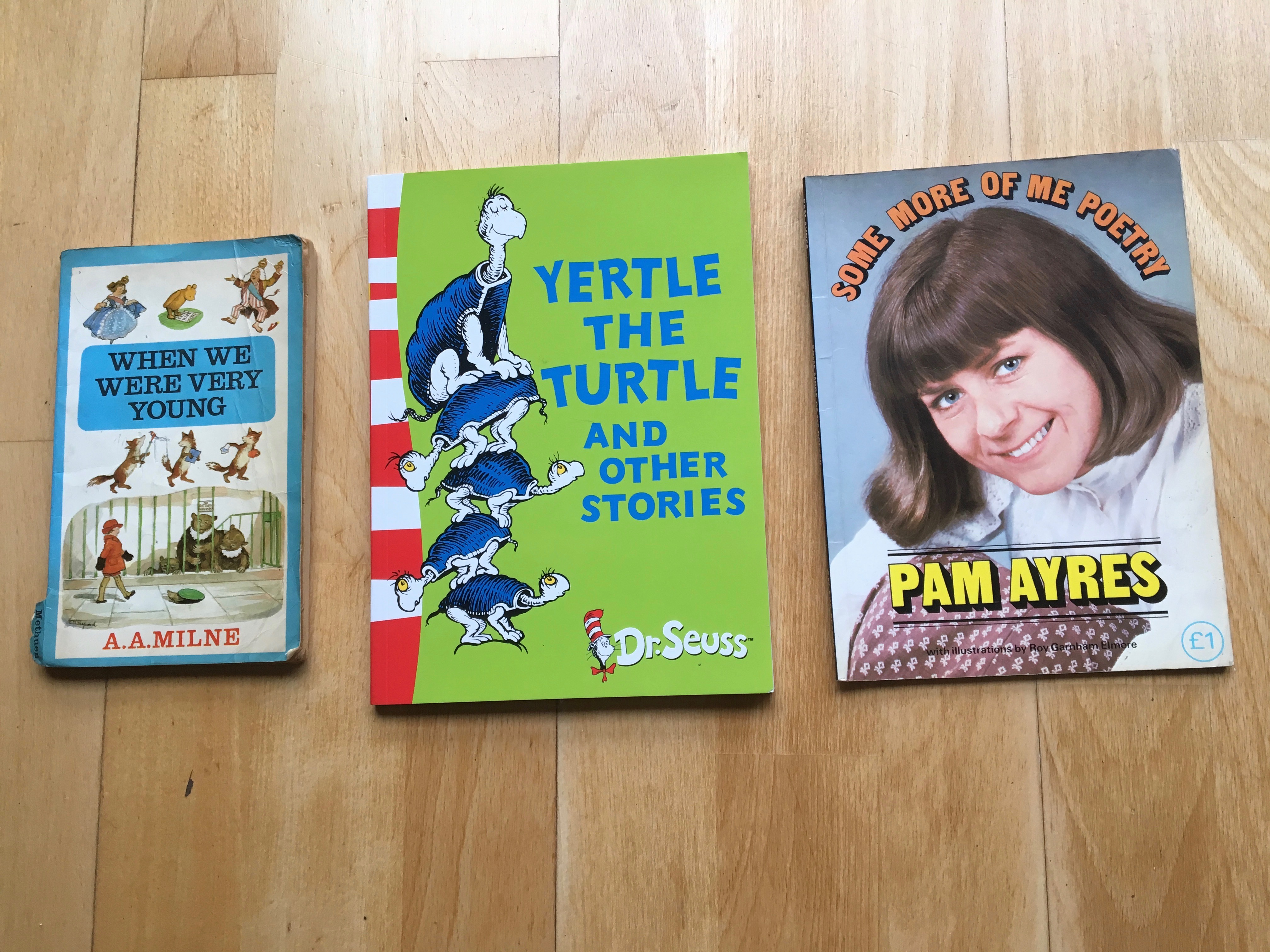
I adored the rhythmic, bonkers quirkiness of Dr Seuss; I lapped up the affectionate wit of A.A. Milne … and I loved the wry life-observations of Pam Ayres so much that I even dressed up as her and recited one of her poems for my girl guide ‘Entertainer’ badge!

At the same time, on the TV, a comedian called Ronnie Barker was writing and performing silly sketches, as part of a double act known as The Two Ronnies.  The way Mr Barker played with words to make them funny had me spellbound.  I’m not sure, as a little ’un, that I understood all of his jokes – but he put silly words together and made them sound completely delicious.  And, ever-present behind the yummy words, was a driving rhythm: pushing the jokes towards the punchlines and stirring the listener to feel joy and a sense of fun.

So: rhythm and comedy.  Inextricably bound together like fibres in the same strand of wool. They threaded their way into my young consciousness and got under my skin.

And, now, I cannot separate the two.  When I write, the rhythm behind the words constantly tempts me to write something silly or diverting.  When I write comedy, there has to be a compelling rhythm or I don’t feel it’s good enough.

Writing funny stuff, with its thrilling combination of rhythm and daftness, is what makes me really happy.  It’s the ultimate in wordplay: mucking about with language until the words sound so tasty together that they – might … hopefully – make someone (other than myself …!) laugh.

Recently, one of my little projects involving fooling around with words was brought to life by Good Girlz ‘n’ Boyz – a fabulous group of actors who read through my script whilst the ‘record’ button was on. You can listen to it here (or navigate yourself to the Videos page) … or head over to YouTube for a listen.  It’s about a bunch of five-year-olds finding their way through the mad world we currently live in.  They’re all partly based on the five-year-old me.

Which takes me back to a much smaller, five-year-old Fiona, who absorbed funny words and rhythm simultaneously, stored them all up … and now spouts them out onto the page in the hope that some of them might raise a smile.

My latest Words and Music show is also about why ‘funny’ is important.  You can find it on the VIDEOS page, or go direct to YOUTUBE.

A Tomboy, A Time Lord … and a Missed Opportunity

My first girl hero was Enid Blyton’s George Kirrin.  She of the Famous Five.  With her cropped hair and feisty, stubborn attitude, she refused to be constrained by what the world expected girls to be like.  She was ‘as good as any boy’.  I loved her and wanted to be her.

As previously discussed on this page, girl heroes are important.  This is because they inspire girls and boys to understand that, yes, girls can do stuff – any stuff – and do it well.  And George certainly inspired me.  She is the heart and soul behind the courageous girls I have written into my books.

So to hear that there was going to be a female Doctor in Doctor Who was an exciting prospect.  A Girl Time Lord, saving the universe!  A She-Doctor, defying time and traversing space – and energising a new generation of young girls and becoming their first girl hero!

Here is a fantastic description of the Doctor from an episode way back in series three (it’s episode 9: ‘The Family of Blood’). I’ve changed the pronouns to the feminine.

‘I’ve seen her.  She’s like fire, and ice and rage.  She’s like the night and the storm and the heart of the sun.  She’s ancient and forever.  She burns at the centre of time, and she can see the turn of the universe.’

Wow.  Doesn’t that sound fabulous?  All that … in a female character!  Again: WOW.

Now, I know that the majority view is that the Thirteenth Doctor is amazing – but as a lifelong Doctor Who fan, and an advocate for the rights and aspirations of girls around the world, I have to say that I’m terribly disappointed with how the latest version of the Doctor has turned out.

What I see is a naïve and green Time Lord (who needs no less than THREE people to ‘help’ her for goodness’ sake), running about with her mouth open, starting FAR too many sentences with ‘I don’t …’ and ‘I can’t …’, pointing her sonic screwdriver at EVERYTHING, because she doesn’t seem to be able work out what anything is, what it does or why it’s there (or fix anything) without it.  A stereotypical girl-in-a-flap who can’t do much by herself, basically.  And the help she gets is 75% male (if you want to be contentious and include the sonic screwdriver and its symbolic resemblance to a traditionally male body part …)

Where is the maverick confidence of Time Lords past?  Where is the haunted look in her eye, telling us of centuries of battles, victories, loss, turbulence and difficult decisions?  All the male incarnations had a magnificent, burdened gravitas … so why has the female version not got this?

Now, I’ve no doubt that the mere existence of a female Doctor has already done WONDERS in inspiring girls to ‘get out there’ and be the best they can … but, to me, the current incarnation of my favourite Time Lord has been watered down into something rather unsubstantial.

And that makes me cross, because being wishy-washy is part of the damning stereotype of ‘girliness’ that us gals have been fighting so hard to consign to the dustbin.

I’ve got a funny feeling George Kirrin would be furious.

Girl Heroes: They’re not just important – they’re Absolutely Necessary. And here’s why …

When I first built this website, I knew I would need some motivational, sassy photos of girls ‘doing their thing’. But I didn’t know exactly what I wanted, or where to start looking.

Enter the miracle that is the internet search engine: the result of tireless research, correlation and cataloguing by umpteen technicians, that allows you to type in random specifics such as ‘small yellow dog in a red flower pot’ and receive – within seconds – a myriad of photos of sandy-coloured canines posing in crimson-painted pots. It’s clever, magical and brilliant.

So I searched for ‘women and girls in danger’.  And the results shocked me.

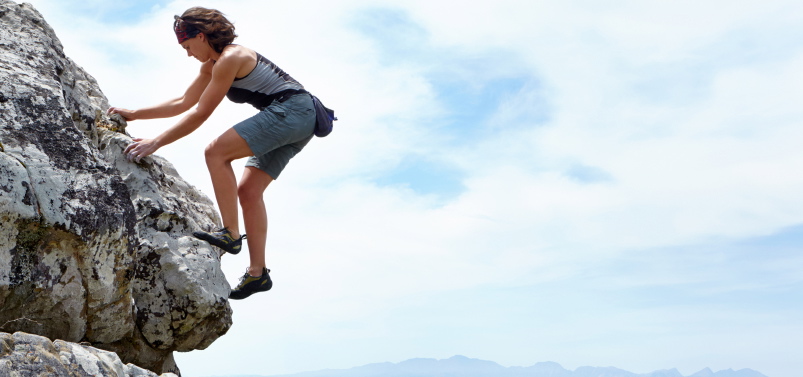
Most of the pictures were of girls screaming.  Accompanied by face-clutching, eye-popping and eyebrow-raising.  Where were the girl heroes, climbing and swimming and running and fighting?

So I tried ‘brave women and girls’ instead.  Maybe if I put the word ‘brave’ in, it would get rid of those petrified faces.  These results shocked me even more.  There were women wearing tight shorts and bikini tops, or ‘saucy’ military costumes, brandishing over-sized weapons and pouting at the camera.

On a rather cross whim, I decided to change my search and type in ‘men in danger’.  A mighty feast of heroic images met my eyes: men climbing things, men on horseback, men swinging from ropes, men wrestling wild animals, men fleeing avalanches and men surfing great waves.

I tried ‘brave men’, too.  Can you guess what happened?  A mighty feast of heroic images met my eyes: men climbing things, men on horseback, men swinging from ropes, men wrestling wild animals, men fleeing avalanches and surfing great waves.

Now, if you browse this website or watch my videos you will see that I did find a great site with some fabulous images.  And I’ve noticed, that if I do the same searches on the internet today, the pictures that appear are much more inspiring and far less stereotypical.  But it frustrated me back then that the ‘go to’ images of women and girls in danger were ones where they were predominantly frightened … and that the ‘brave’ pictures were sexualised, fantasy figures.  Where were all the real-life girls showing their natural pluck and spirit?

I think there is a lack of realistic girl heroes in books and films.  Many brave girls are written into fantasy other-worlds, which are far-removed from our common experiences.  It’s as if there is no place in the real world for girls to come out on top; no room for them to triumph.  A female supehero is a marvellous thing – but being immortal and able to freeze the enemy to death with your own, hi-tech snot, has limited inspiration value compared to a regular gal who braves her fear of heights to save her friends using nothing but a shoe and a broken hair clip.

And that is why I want to write about real girls finding their feet in the face of danger.  If girls and boys don’t read about ordinary girls succeeding, then they won’t write about them in their stories – and they won’t believe that girls have the power and resources to overcome difficulty beyond the page, either.

The stereotypes have to go.  Then the real girls can find their feet and release their inner hero.

The Adventure Has Begun!

Technical challenges have been overcome, creative decisions made … my humble brain has got itself into the right gear …

My Words and Music Show has landed on YouTube!

In Episode One, I interview violinist and composer Sue Aston about Cornwall, creative courage and cake.  Oh, and there’s music, adventure … and you get to see me in a party hat!

It doesn’t seem that long ago that my friend Melissa and I used a toy telephone, strung between our two bedroom windows (we lived next door to each other) and used it to communicate without having to leave our homes (well, we did until the batteries ran out!)

We thought that this was pretty cool and miraculous, but now I can talk face to face to a friend who is 260 miles away in Cornwall – and have it automatically converted into a split-screen video interview!  This stuff only happened on Sci-Fi films when I was a child!  Technology has developed at terrifying pace.

So … two levels of courage and adventurousness have gone into this first show.  Firstly, I had to battle with my own technophobia, in order to make my show the best it could be.  And then Sue spoke powerfully about the creative challenges that all us writers, musicians and other arty types experience on a daily basis: the isolation, those nagging thoughts which say, ‘Will anyone like this? … Will anyone hear it or read it? … Is it any good?’  She had some great advice, too – and I will leave the last words with her:

‘I think you have to really enjoy being creative, and just do it for it’s own sake.  And if people enjoy it, that’s wonderful.  The trick is to keep going.  Don’t give up!’

TO WATCH WORDS AND MUSIC WITH FIONA BEDDOW, YOU CAN SELECT THE ‘VIDEOS’ TAB IN THE TOOL BAR – OR CLICK HERE TO WHIZZ OVER TO YOUTUBE!